Designing a test bench: mechanics, electronics and software
Test bench, test rig or metrology bench: definitions, state of the art and lessons from designing turnkey benches, from the client's need to acceptance.
 NATHAN LEFEUVRE
Fonts designed to make reading easier for people with dyslexia or low vision. Your choice is saved on this device.
Test bench design engineer, fluid mechanics
Designing reliable test benches for complex engineering systems.







As manager of STYREL's test bench design office, I lead a multidisciplinary team of engineers, technicians and interns. Bespoke test and metrology benches for industry, aerospace, transport and energy: projects are run from the response to the tender through to delivery at the client's site.
Day to day, the role involves designing the software and electronic architecture of the benches, coordinating subcontractors, supporting the sales team on client visits and guaranteeing the quality of every bench delivered. On the management side, the experience began at Safran Reosc: technical lead from 2018, then head of the software and instrumentation team from 2022 to 2024.
Those years of leading teams have shaped an approach to management: putting the right people on the right projects, taking into account each person's skills and aspirations. The schedule is built with the project managers. Everyone builds their skills project after project, with responsibilities handed over step by step. Remaining the technical lead means supporting the team on difficult choices, without doing the work for them.
The journey began in fluid mechanics research in Australia, then continued in aerospace and optics, notably on the Extremely Large Telescope (ELT). The driving force remains the same: taking on technical challenges to find the solution suited to each client's operating context.
Control software on PLCs (CODESYS, NI RIO) and in Python, real-time development and algorithms, LabVIEW HMIs and applications (Certified LabVIEW Developer), post-processing (Matlab, Python), specifications and software architecture.
Learn more →Electrical architecture, hardware selection, wiring of cabinets and harnesses on the test bench, EtherCAT, CANopen and Modbus fieldbuses.
National Instruments (NI cDAQ, CompactRIO) and Dewesoft measurement chains, force, temperature and pressure sensors, cameras, measurement reliability checks.
Learn more →Defining mechanical requirements and interfaces, managing and monitoring subcontractors (design, manufacturing, pneumatic enclosures), from order to validation.
From requirements to acceptance: gathering requirements and writing the specification, software, electrical and mechanical architecture, definition and design documents, meetings and workshops with clients and suppliers, supplier follow-up, integration, validation on the bench and turnkey delivery, documentation included.
Leading engineers, technicians and interns, scheduling with the project managers, step-by-step skills development for everyone, technical lead role.
Control systems for test and metrology benches, optical metrology, interferometric bench, zero-g support and mirror positioning.
Sensors and actuators, motor and cylinder control, temperature, pneumatics, cameras, force sensors, Pitot tubes, anemometry (CTA, CCA).
NI RIO and WAGO controllers, Arduino, EtherCAT, CANopen, Modbus, TCP/IP, electrical cabinet wiring.
Turbulence, heat transfer, wakes and jets, hot-wire measurements in wind tunnels.
Sizing, fatigue, waves, Navier-Stokes equations, lattice Boltzmann method (LBM), parallel computing (MPI, OpenMP).
STYREL · Paris area
Design and delivery of turnkey test and metrology benches, from specification to acceptance. Leadership of a multidisciplinary team of engineers and technicians, client relations and supplier management.
Safran Reosc · space, astronomy, optics
Control software for the ELT mirror metrology benches: zero-g support and positioning of 4.20 m, 3.5 t mirrors, M2/M3 interferometric bench, 1.50 m off-axis collimator. Led a team of 5 engineers.
Intitek · clients Safran and IFP Energies nouvelles
Ageing bench for the ELT mirror bonded joints (4 months of continuous 24/7 operation). Rolled out EasyBuild and Docker for scientific computing at IFPEN.
University of Newcastle · Australia
Lattice Boltzmann code coupled with a thermal solver (Fortran 90) to study mixing in a turbulent wake. Automated a 15 cm round jet rig (LabVIEW, Matlab) and ran hot-wire measurements.

An Ametra Group company, STYREL designs and integrates test benches and verification software for embedded systems.
Since 2024 I have headed its test bench design office, from specification to acceptance.
STYREL AMETRA Group website ↗
An international high-technology group, Safran operates in aerospace, space and defence.
At Safran Reosc (2018-2024), I developed the control software for the ELT mirror metrology benches, first as an engineer, then as head of the software and instrumentation team from 2022.
Safran website ↗
An ArianeGroup subsidiary, MaiaSpace is developing a reusable mini-launcher to put small satellites into orbit.
I set up the data acquisition and control system for a separation and compression test, including pressure regulation.
MaiaSpace website ↗
Europe's leading missile and missile systems company, MBDA equips land, naval and air forces.
I provided software support for its test facilities.
MBDA website ↗
France's leading electricity producer and supplier, EDF generates low-carbon electricity, from nuclear power to renewables.
I led the redesign of the filtration test system for nuclear power plants.
EDF website ↗
The French state-owned railway group, SNCF carries passengers and freight and manages the national rail network.
I provided software support for its test facilities.
SNCF website ↗
Auxitrol Weston designs and manufactures temperature and pressure sensors for aerospace and industry.
I designed an electrical test bench for the sensors it produces.
Auxitrol Weston website ↗
An engineering and IT consultancy, Intitek supports major industrial clients.
As a consultant from 2015 to 2018, I built an ageing bench for the ELT mirror bonded joints at Safran and rolled out EasyBuild and Docker at IFPEN.
Intitek website ↗
A public research and training organisation, IFPEN works on energy, transport and the environment.
I set up EasyBuild and a Docker server there for scientific computing (2015-2017).
IFP Energies nouvelles website ↗
An internationally ranked Australian university, recognised for its engineering research.
As a CFD engineer and then research assistant (2010-2015), I studied turbulence and mixing using LBM simulation and hot-wire measurements.
University of Newcastle website ↗
A Grenoble laboratory, LEGI studies fluid mechanics and heat and mass transfer by combining modelling, experiments and high-performance simulation.
From 2008 to 2010, during my master's at the University of Grenoble, I did internships there in fluid mechanics simulation.
LEGI website ↗
Fugro is the world's leading integrator of geotechnical, survey, subsea and geoscience services, supporting infrastructure projects on land and at sea.
I worked there as a geotechnician in Montpellier in 2008.
Fugro website ↗Development of a 18 point active supporting tool for the metrology of the ELT M2 secondary mirror
Development of an interferometric test bench for the manufacturing of the ELT secondary mirror
On the normalized dissipation parameter Cε in decaying turbulence
Complete self-preservation on the axis of a turbulent round jet
Statistics of the turbulent kinetic energy dissipation rate and its surrogates in a square cylinder wake flow
Wake manipulation using control cylinders in a tandem arrangement
Momentum and scalar transport in a localised synthetic turbulence in a channel flow with a short contraction
Transport equation of the mean energy dissipation rate on the axis of a turbulent round jet
Turbulent kinetic energy budget in the far field of a square cylinder wake
Turbulent kinetic energy and temperature variance budgets in the far wake generated by a circular cylinder
Wake manipulation using control cylinders in a tandem arrangement
Turbulent crossbar wake with passive scalar
Decay of velocity and temperature fluctuations downstream of two orthogonal cylinders
Scale-by-scale energy budget behind the crossbar in near-field
Momentum and scalar transport in a localised synthetic turbulence in a channel flow with a short contraction
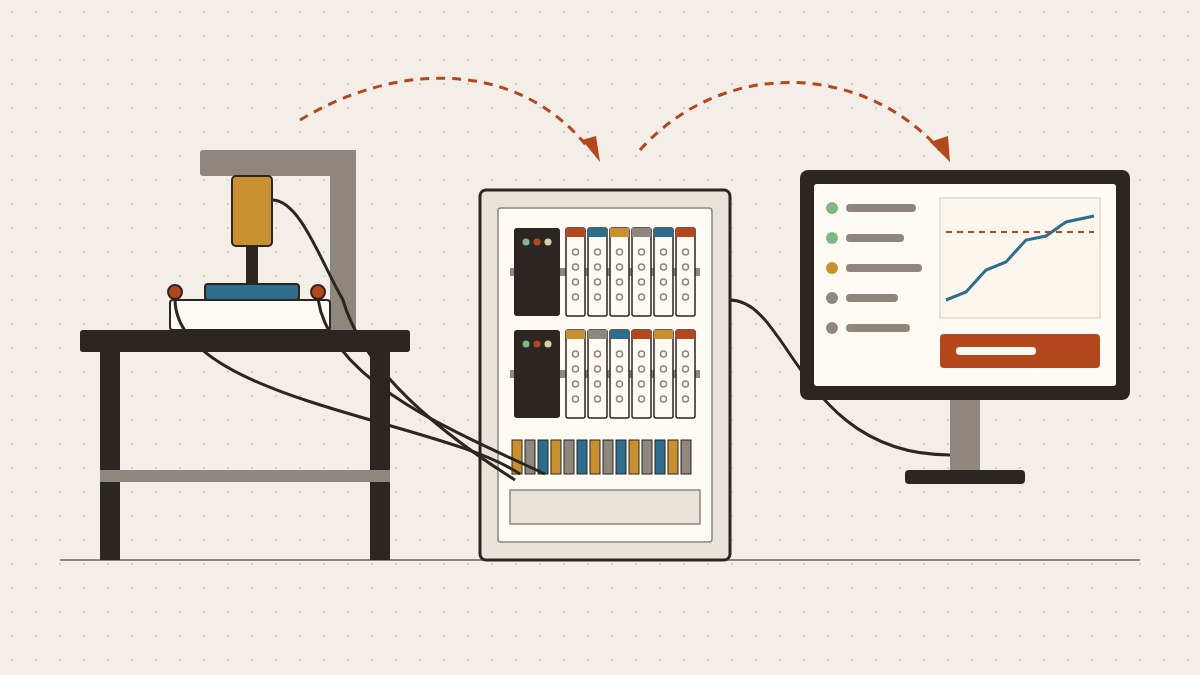
Test bench, test rig or metrology bench: definitions, state of the art and lessons from designing turnkey benches, from the client's need to acceptance.
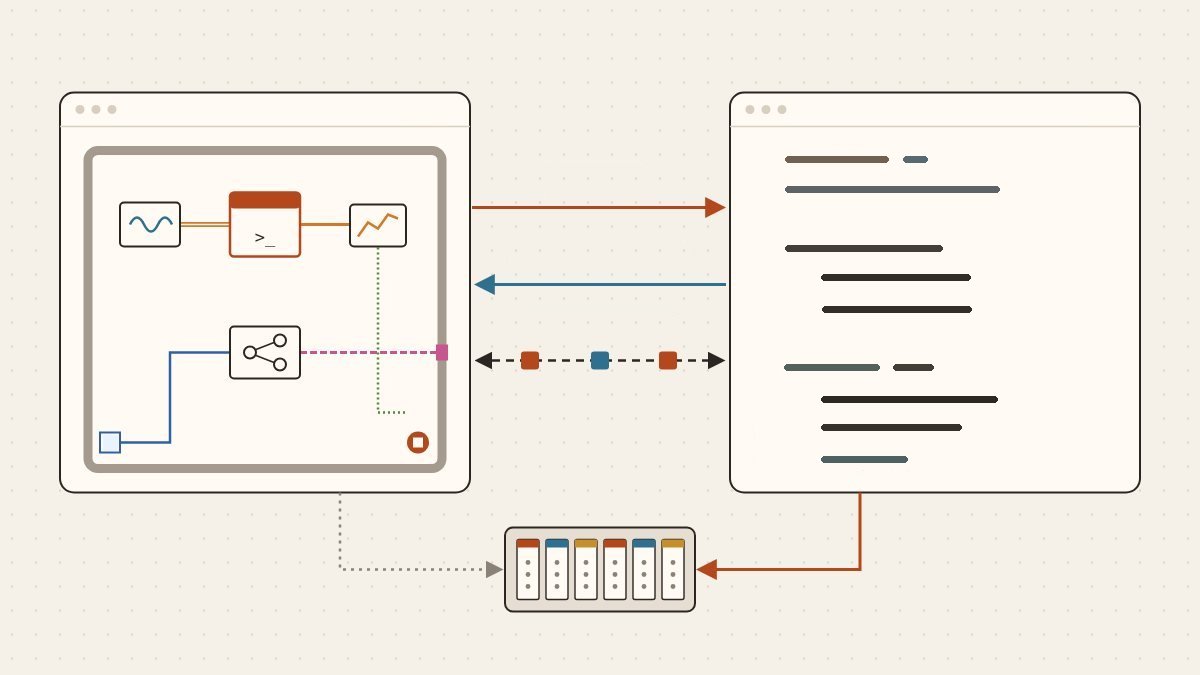
Lessons learned on the different ways to make Python and LabVIEW communicate on a test bench, and how to choose the right one.
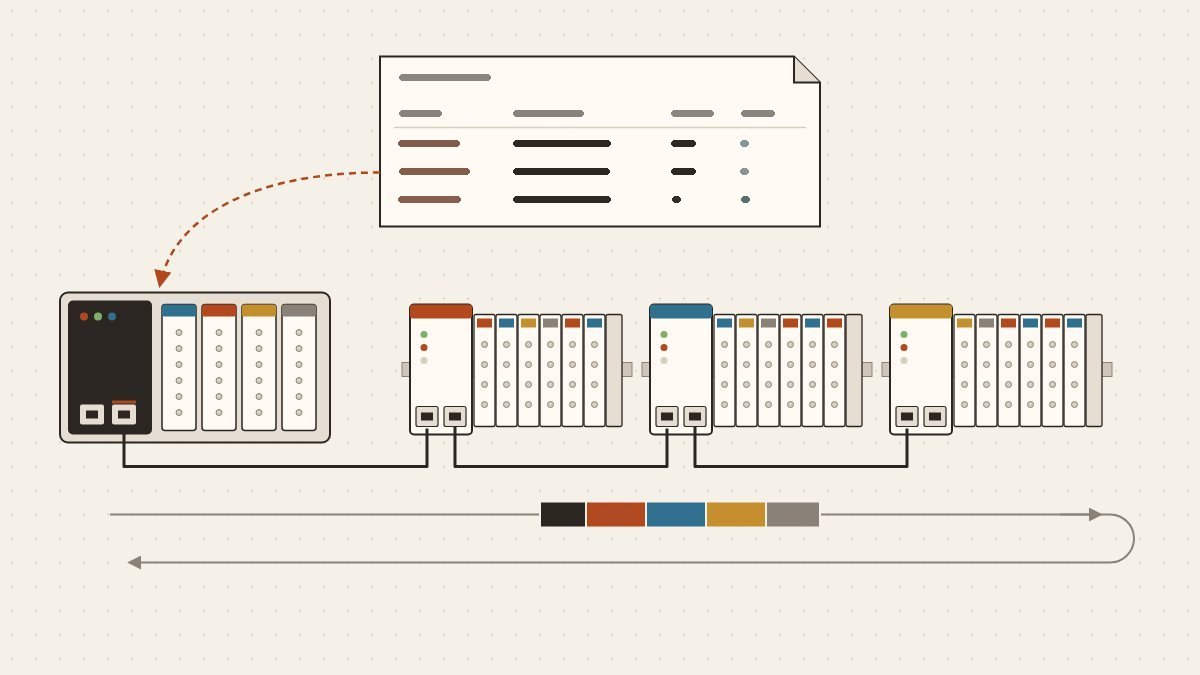
Lessons learned from a cRIO EtherCAT master driving WAGO I/O under LabVIEW RT, and from the rule that simplifies everything: channels in a file.
A look back at the interferometric bench built at Safran Reosc to polish the ELT M2 mirror, whose control system architecture I designed.
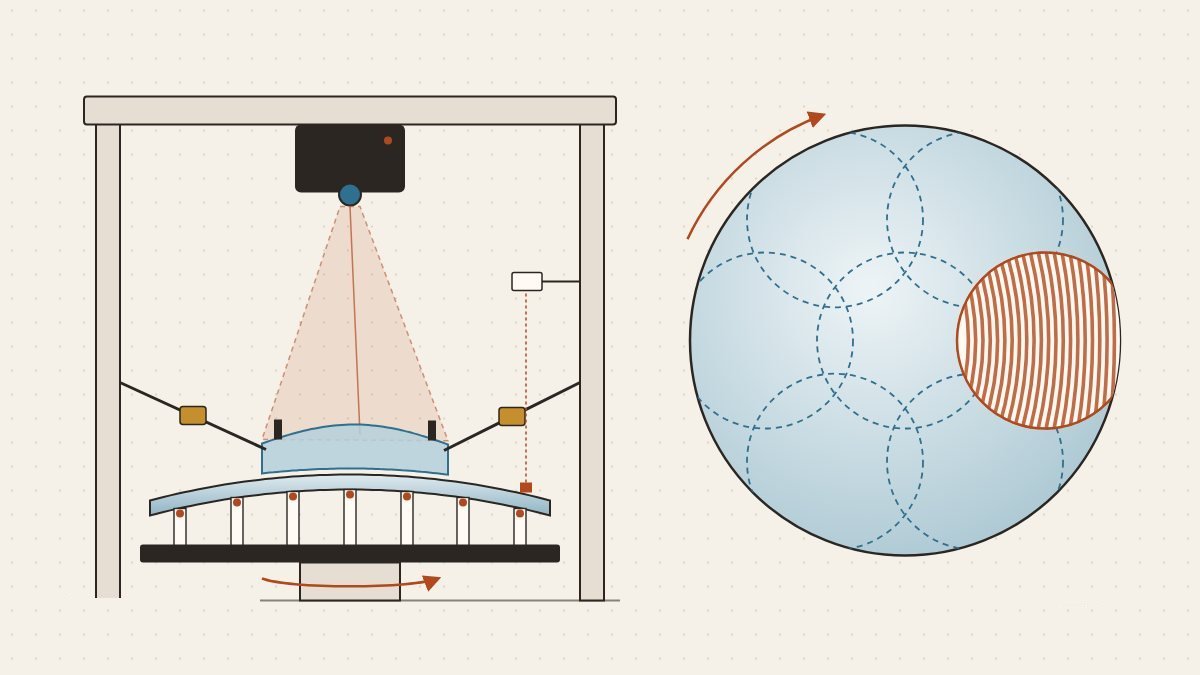
A look back at the active support built at Safran Reosc to measure the ELT M2 mirror, whose control system I designed and whose validation I led.

A look back at our Journal of Fluid Mechanics paper (2017): when does the normalised dissipation Cε stay constant in decaying turbulence?
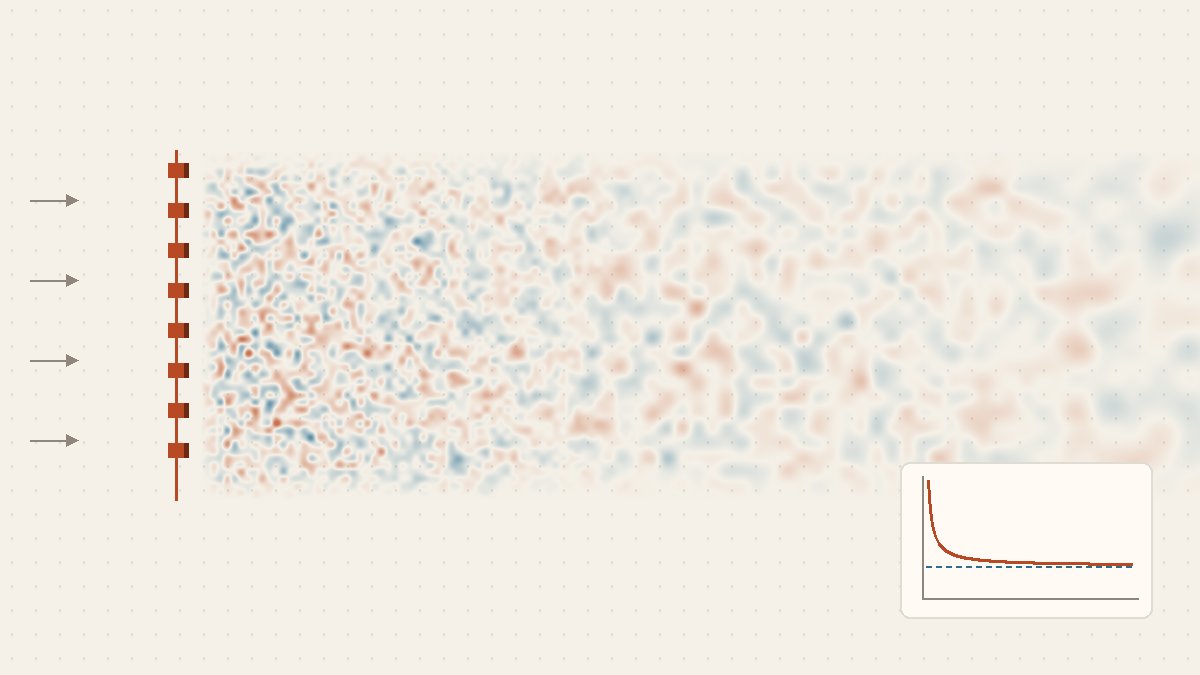
A look back at our Journal of Fluid Mechanics paper (2016): on the axis of a round jet, theory and hot-wire data show complete self-preservation.
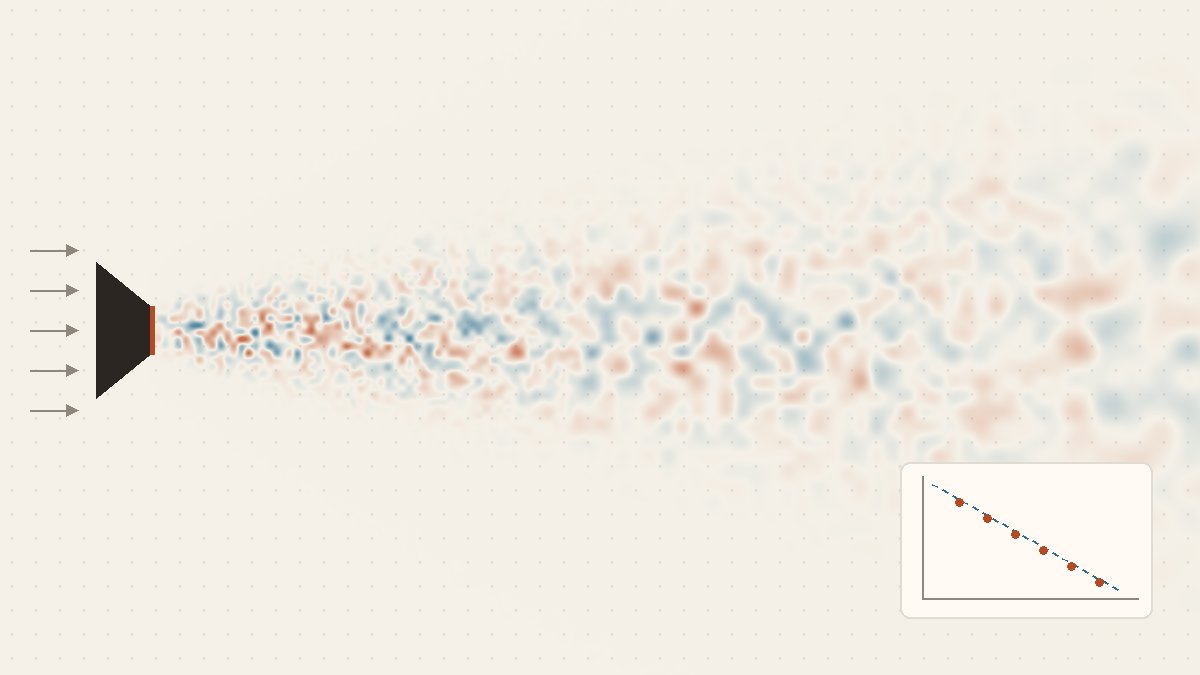
A look back at our FSSIC paper: far behind a square cylinder, the turbulent energy brought in by advection is dissipated almost on the spot.
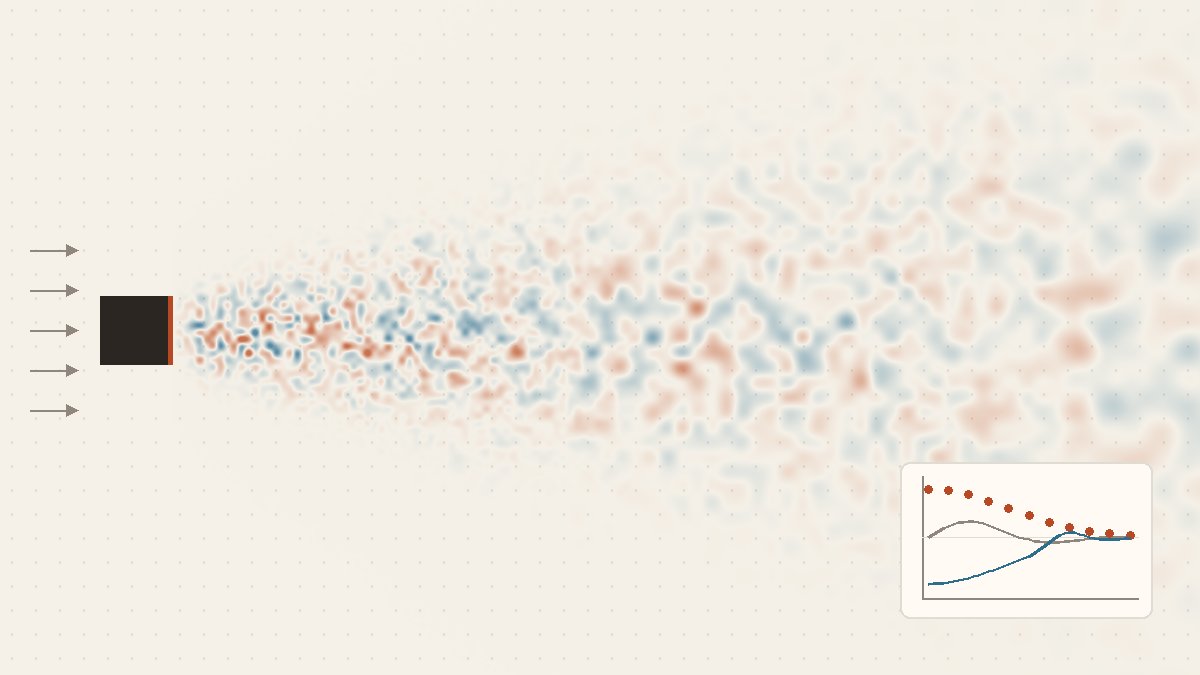
A look back at my Physics of Fluids paper (2014): in the simulated wake of a square cylinder, which approximations of the dissipation are reliable?
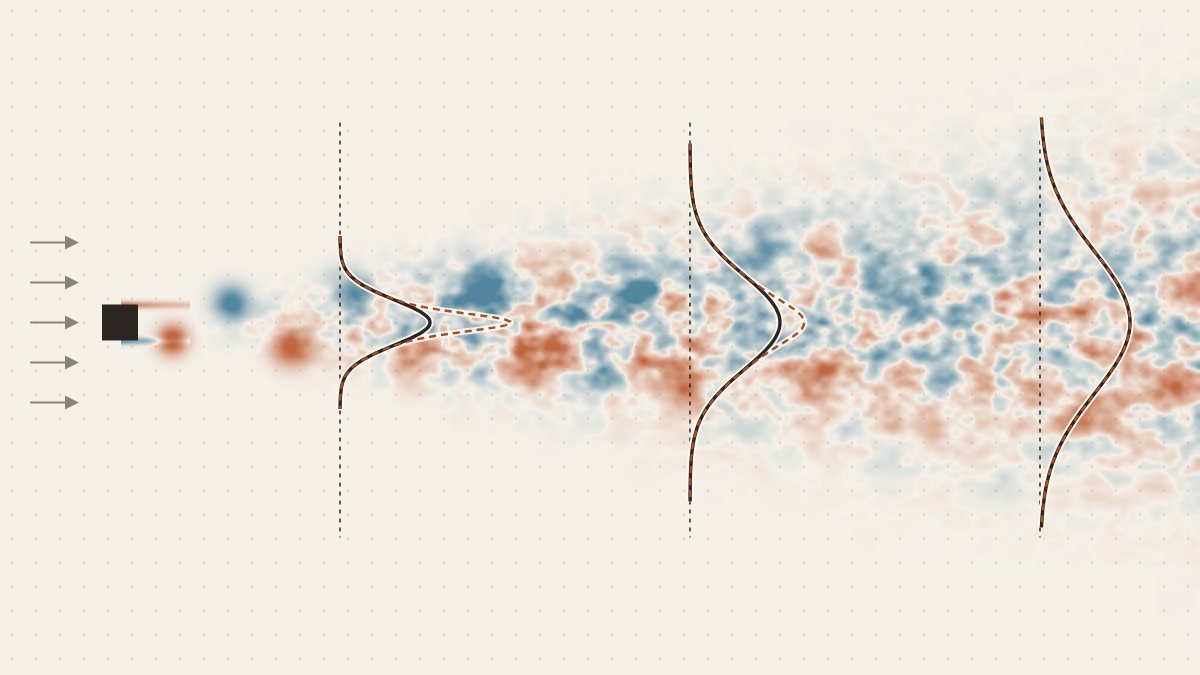
A look back at my work presented at THMT7 (Palermo, 2012): simulating the wake of a heated crossbar by LBM and comparing it with grid turbulence.

A look back at my work presented at ETC13 (Warsaw, 2011): simulating two pulsed jets in a channel by LBM, and showing the effect of a short contraction.
